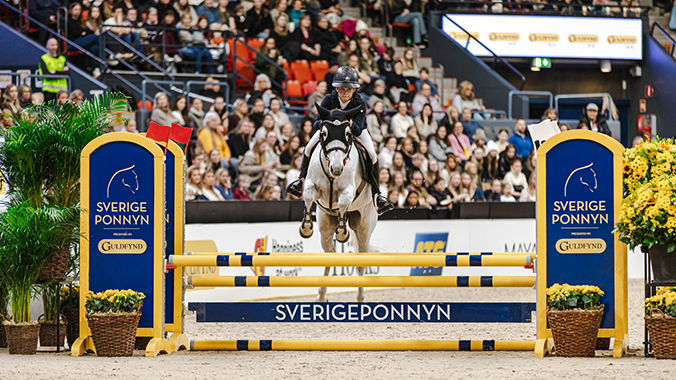
A judge uses a protocol to assess the rider’s seat, rhythm, influence and pace throughout the course, as well as the rider’s choice of lines to the fences. Good balance and a correct position are the foundation for effective riding. The rider’s position is assessed both between and over the fences. Over a fence, it is important to remain steady, stay centred over the horse and follow the horse’s movement smoothly.
Throughout the course, the judge looks for rhythmic, planned riding with control. The rider’s aids should help the horse jump more effectively, and the horse should respond willingly to the rider’s aids – through the legs, seat, arms, hands and voice. The pace should be adapted to the horse and match the way it works and jumps. A consistent rhythm and pace are desirable.
Jumping equitation is often referred to as style jumping, but it is not a beauty contest. As long as the riders are well presented, this is enough to create a good impression.